Posts

Artificial Intelligence - should we plead guilty?

Image
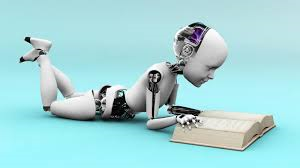
AI is probably, with Quantum computing, one of the most exciting scientific promise that technology could make to humanity. We all have seen those pictures about the sci-fi mad robot, the super evil system that wanted to control humans etc. but those two frightening examples remain situations that have been imagined by human brains. No more, no less. When it has something to do with pragmatic reality, you can find some interesting intermediate conclusions in the AI100 Stanford University report ( download it right here ). When reading the Exec Sum and the overview of the document, I have to say I was quite impressed by the diversity and the sectors that were listed: Transportation Health care Education Low-resource communities Public safety & security Employment & Workspace Home & Service robots Entertainment And when you think on it, AI has already disrupted all those sectors, today, in our daily life (with a real focus on life improvement, ease of...

Image
Even if migrating some systems to the cloud remains a nightmare for any CIO's or project manager (security, speed of execution, costs of operations, integration with on-prem solutions), the trend is here to stay. But more than integrating the model shift within a daily management (think on developers, infrastructure and security guys that need to understand the shift, study the technology and develop / incorporate new cloud processes in their daily jobs), it is striking to note the poor documentation and literature available (and I do not include here the high-level marketing papers, but I'm looking for in-depth, detailed, product specific fact sheets and how-to's). And on top of it, every company I know is struggling with a very scarce resource: time! Projects need to be executed in a rush, in order to remain ahead of the curve (being competitors, niche start ups, etc.) How fast can the human brain be adaptive?

How to understand Enterprise Architecture?

Image
Being discussing operational IT every day, there is currently a new (re-born) trend for Enterprise architecture. But what do we really mean with the term architecture? How can we really understand the concept and what about the different business domains it covers? Basically, I believe it's fair to consider three or four different architectures within a corporation: 1. The business architecture, which stands for guiding people, processes and changes in the firm so that you can adapt the company to the disruptive market drivers; 2. The information architecture, where you will identify the information that are needed to make your business run. It also explores the new sources of information needed to drive the business and answer the disruptive market forces; 3. The solution architecture which will be your software / product portfolio. This includes applications, processes, schemes, shared infrastructure and services that could be a solution for a client; 4. The Technolog...

Where technology means automation

Image
Coming back on the previous posts I made about where technology could improve, I believe it's important to anticipate what will change in our private and professional lives. On your personal level, you can already anticipate that IoT and wearable devices will interact to inform you about any specific status. For example, your health (most obvious business cases for the health care sector) - but also about your stress level, your sleep pattern or your attention during a specific period of the day. But that's not all. You could also imagine how the traffic will be once auto-driving cars will be on the road (and that they can stand like 5 centimeters from each other, reducing car accidents or traffic jams etc.) During those car journeys, you will be able to take care of your emails, your presentation or have a video conference call while you're going from one place to another. On a professional level, I'm convinced that every sector in the post-industrial world...

Where can IT make a difference?

Image
Disruption of the classical models will create massive change in what and how we produce, we consume, we live. But where do we stand if we compare the business activities (what's the change, the progress we've made?) The value starts at the inception of the business model. A startup is now Internet-based, in an optimal resource utilization perspective, focused on a circular vision of its economic model. Renting cheap office (if any), using collaborative and virtual spaces - and renting all what it needs. This means very poor or low capital intensive businesses, with a strong profit margin if the costs are tightly controled. Customers are close to the management - and so is the marketing strategy. Big data analysis, customer relationship management systems, all the info where insight can be gained and created (a kind of old 'back and trace' notion, but cloud-based. Modern). Improvement of productivity and efficiency. Every day, decision, movement in the busines...

Are we preparing a FinTech bubble?

Image
If we come back on one of the top 2015 investment sector, the FinTech phenomenon is quite interesting. Business Insider UK published an article (one week before the London-based FinTech event) estimating that Financial Technologies sector was around 49BN USD. That amount was, according to the article, spread like the following:     31,6 BN investments were done in the US;     5,4 BN in the UK;     4,4 BN for Europe (yes, Brexit was already a fact);     3,5 BN for China and 2,2 BN for India. And what the article also mentioned was that 25% of those 49,7BN were invested during the last five years (that's about 12,7 BN USD). But that’s from the supply side. We have a lot of products (peer-to-peer lending platforms; crowd funding; on-line broking etc.), but where are the data on the other side of the pipe? Who is actually using Fin-Tech products (and, no, your on-line banking platform is not part of it)? The VC ecosystem ...

About sense and value in consulting

Image
Maybe it's a New Year coincidence, but I see more and more often the question of the sense and the value that pops up. What is that within a consultant's life, the purpose of what we do, as economic entities, is so popular nowadays? Why (in a sudden?) the reason of what we do became so important (not that I ever considered the question as not important, but those topics seem to be more popular today). And, indeed, why and where a consultant can bring value into the society? First, I would argue that value as concept is pretty vague and large; and that even a very small fraction of value should be taken into account (if you want to make the maths). For example, how can we assess the impact of a new corporate governance in a private company? what is the value of my contribution as a board member of a non-profit organization? If you help coordinating the deployment of new technology (conducting change management and adoption of a new product), you increase the level o...