Posts

Working online, but why have we waited so long?

Image
It's weird that we had to face a global economic slowdown to gain in "maturity" and learn to truly work online, with virtual teams and remote connections.... Why couldn't we adopt a new way of working, before the COVID19 crisis? Because of a lack of trust from the employers? Because we all like social contacts so much that we can't refrain to commute every day (and enjoy the traffic jams)? Or because there is a need for sharing our communication in a face to face mode, trying to avoid any artificial interface between our eyes and our stakeholders? I guess the proper answers are a mix of all those reasons...but that's now for sure, that after four months in social restrain, working life will be changed for ever.
When techies need a good strategy book

Image
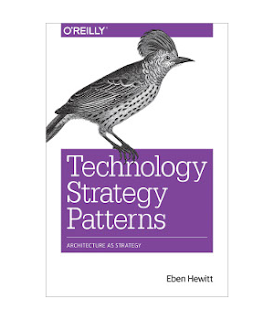
It is not that frequent that we can find a good management book, fitting for two groups of readers. When you share your days between 'business' people and 'technical' profiles, you might wonder how to bridge the gap between those two communities - and how could they feed each other? Well, I found the beginning of an answer with this book, which explains very clearly how to organize a strategic presentation and what kind of content 'business people' expect to get. If you're navigating between IT strategy and concrete deployment of those projects, have a look! This book is for you and is exceptionally clear about what you can achieve after your reading.

The digital utility: your business opportunity

Image
Disruption of the classical model creates a massive change in what and how we produce, we consume, we live. But where do we stand if we compare the business activities (what's the change, the progress we've made?) The volume starts at the inception of the business model. A startup is now Internet-based, in a optimal resource utilisation, focused on a circular vision of its economic model. Renting cheap office (if any), using collaborative and virtual spaces - and renting all what is needed to operate. This means very poor or low capital intensive businesses, with a strong profit margin if the costs are tightly controlled. Customers are close to the management - and so is the marketing strategy. Big data analysis, customer relationship management systems, all the info where insight can be gained and created (a kind of old 'back and trace' notion, but cloud-based. Modern). Improvement of productivity and efficiency. Every day, decisions, movements in the busines...

Today, we are all smart.

Image
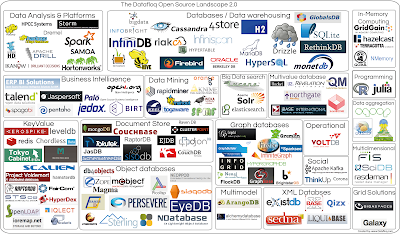
Technology does not stand still. We all know that. And after the personal computer revolution, we had the Apple 'renaissance', the cloud computing birth, Facebook, Amazon. But today, being personnally more involved in Enterprise Architecture projects, I have to say that fragmentation and technical diversity has brought complexity and an interwoven architecture landscape (just google on the Sysadmin or big data Open source landscapes and you will see what I mean) in every working environment. And now, it is leaving the IT rooms and Data centers to invade your life and your city. If we all can expect life improvement (more time to waste on social networks, for example 😏), better quality time and cheaper technical maintenance, the IT landscapes have become tremendously complex. Check on the new innovations that will be considered and installed by several big cities in the world and you will conclude that if the twentieth century was "the" management period, the nex...

Digital world to sell - not entirely though

Image
In their last Winter 2018 strategy+business publication , PWC has pointed an interesting 'disrupted' market that is not really going in the expected direction. Most of the time, when tech has impacted traditional businesses, the turnovers of the 'victims' are heavily shaken. Physical media like CD, newspapers, physical video games markets are, year after year, losing value - with an alternate consumption model (streaming, online papers, etc.). Same for hotel, taxi, insurance, banking businesses...  Notable exceptions on this phenomenon are the sales of physical paper books, where according to the authors, the global figures are increasing from $47.8 billion in 2017 to $50.3 billion in 2018. And where it surprises me even more (I fully understand the feeling of 'screen fatigue' when you're at home or on vacation and you want to take a break from the long hours we all spend on our laptops), it is because human beings remain human - and want to have so...

From CIO to Enterprise Architect - is it a 'normal' move?

Image
Having decided to plunge and go back to the core IT industry (still in consulting, but with a clear shift from Professional Services to a major IT integrator, from KPMG to Dimension Data) - I faced, during those last weeks, the question of the transition.  During those last ten years, I worked as a CIO, leading several teams in network, infrastructure, knowledge management, ERP, development and we were, like in any busy company, working on several projects at the same time; The question is then exactly that one: are those 10 years experience the proper relevant track to become an Enterprise Architect (and, yes, you can anticipate my positive answer on that one)?  If we consider Enterprise Architecture as being the sum of four different architectural tracks (business architecture, data architecture, application architecture and technological architecture) - I guess the answer can fairly be positive. A CIO needs to take an helicopter view on what's happening in his co...

Are containers defining your next data strategy?

When it comes to decide which infrastructure you need to buy, the question of the use and the purpose of the technology is always crucial. But once you adopt (as I suppose you do) virtualization, you probably built your architecture on well-known products (VMware, Hyper-V), being now influenced by the Linux Open Source techs, like Docker and Kubernetes. The slight difference between the two situations is that, today, your technology will probably define your data storage strategy. Let me explain. One of the big barrier of Docker containers is the data persistence. And you have basically two possibilities for data consistency: 1. working with Docker volumes, within the host file system; 2. working with a data container, being a logical mounting point where the data can be abstracted. And because of that data persistence need, 3 different scenario's can be sketched for a data strategy: (a) Docker data volumes can be put on a direct storage; (b) You can use existing storag...